Return of Ryan

While I was traveling to Amsterdam to cover Worlds Week I got caught up on some podcast listening, and was really happy to see that Trick Jarrett and company had ex-LR co-host Ryan Spain on as a guest on the DailyMTG podcast. Ryan came on to talk about Modern Masters, as it was the first set he got to work on after getting hired into R&D at Wizards of the Coast.

It was great to hear Ryan’s voice on the airwaves again, even if I do talk to him multiple times per week in my personal life.

You can listen to the episode here: http://www.wizards.com/Magic/Magazine/Article.aspx?x=mtg/daily/activity/1252

A View From The Other Side Of The Table

I had a chance to do some Spellslinging with Ryan over at the M14 prerelease at Card Kingdom this last weekend. I had a lot of fun, and met some really cool listeners of the show.  One of them, named Pete, wrote a blog post about our game. I found it fascinating to see how other people viewed the same game we played, and his honest look at how it all played out made it even better.

Here is the link: http://magicanotes.blogspot.com/2013/07/my-game-with-marshall.html

– Marshall

Hall of Fame Ballot 2013

I remember thinking that if I were to be offered a Hall of Fame ballot a couple of years ago, that I wouldn’t even take it. I felt like I didn’t have the knowledge or interest in the Pro Tour to make my vote count. I now feel I was wrong about that. After receiving a ballot this year, I have realized that I represent a common thread among Magic players: The person who used to play, and has returned to a much different (and better) game.

It is with this lens that I cast my votes for the Hall of Fame this year.

Here is who I voted for:

1. Luis Scott-Vargas. I have had the pleasure of getting to know Luis pretty well over the last couple of years, as well as watch him play a lot of Magic. I played along side him in the Community Cup and commentated a lot of his matches at the Pro Tour and at Grand Prix. In every interaction I have had with him, personally and professionally, he has been nothing but straightforward, professional, pleasant, and even funny.

Oh, and he wins a lot of matches too. Given his stellar resume, immense community contributions, and affable personality, he is a no-brainer for Hall of Fame in my opinion.

2. Ben Stark. Another person I have gotten to know personally a bit over the last few years, Ben represents the kind of player I love to see succeed. He takes a dryly logical approach to the game, which is something I appreciate greatly. His resume is strong, and I really like that he has been playing Magic for such a long time at a high level. Since I came back to the game, Ben has been on the best teams, putting up awesome finishes. I also have to admit that I love voting for a Limited specialist.

Even though his community contributions are less than I would like, I have always been impressed by how open Ben is when people ask him for advice at events. I have seen Ben talk with people he didn’t know at all for quite a while, just because they asked him a question about Limited. There aren’t that many players that would do that as openly as Ben does, and I appreciate it.

3. William “Huey” Jensen. Huey’s resume is worthy of a Hall of Fame induction. That much is clear once you look it over. The fact that some of the games greats have said that he was the best player in the game for a stretch of time speaks loudly as well. But I have to be honest; if those were all I had to work with, I probably wouldn’t vote for him. I feel like I need to have seen people play, or at least seen them around and gotten a feel for who they are before I would feel comfortable voting for them to get into the Hall of Fame. Thankfully for us, Huey has made a concerted effort to play a lot of Magic over the last year or so.

I see him at all the GPs that I travel to, and have had the occasion to chat with him as well. He is a nice dude, easy to talk to, and clearly cares about the game a great deal. I’m really glad he decided to come back to play Magic, otherwise I wouldn’t have had a chance to meet him, nor would I be likely to cast a vote for him for the Hall. As it sits, he gets my vote.

4. Chris Pikula. Something a lot of returning (or new) Magic players completely take for granted is the fact that cheating at a competitive level is virtually non-existent. Since I came back to the game, I have been free to concentrate on things like card evaluation, deck building, technical game play, etc. This is in large part due to the work that Chris put in “back in the day.”

When I came back to the game, I had no idea about this. It took a lot of stories and history lessons from BDM and others before the picture was made clear about what kind of world we were in back then, and what kind we are in now. People like Chris, Sheldon, and others cleared out some important pieces of rubble so that we could have the fun, trustworthy game that we have today.

While his resume isn’t as great as the others I am voting for, I value his contribution — plus the fact that he is active in the community and playing events whenever he can. I think that Chris deserves a spot in the Hall of Fame, and I’m voting accordingly.

That’s it. I’m not voting for a 5th because there wasn’t anyone that jumped out at me. I feel that getting into the Hall of Fame is the highest honor in Magic, and that it should be very difficult to do so. I also have to face the fact that since I haven’t been around the PT forever, that there will be some gaps in my knowledge. I would rather just vote for the things I know personally and completely than cast a vote for someone I have never even seen play before for example.

This class looks awesome, and I hope the people I voted for make it in. They certainly deserve it.

– Marshall

Magic Online On A Mac

I have been wanting to get into MTGO cause I usually can’t make it to FNM, and I thought being on a Mac would stop that, How can I get MTGO on my mac?

Any Information would be helpful.

I asked Marshall to answer this question for the blog. Here’s his response! -Jon

I get this question a lot. Here is the setup I use, it’s pretty easy:

1. Virtualization software

This is different than emulation software, and there are two main products for this: Parallels Desktop and VMWare Fusion. I use Parallels but have used VMWare in the past and been pleased. You need to purchase this software and install it on your Mac. This will allow you to install and run Windows while running OSX.

2. Windows

You will need a licensed copy of Windows to install as a virtual machine on your Mac. You can install any Windows OS that will run MTGO, I use Windows 7 as I find it the most stable, with the least maintenance.

After you get Parallels or similar installed, you can install Windows as a virtual machine. Your chosen program will give you instructions and they have really made it very easy to do this. Then just install MTGO on Windows and your are good to go.

Another option if you don’t need to run Windows at the same time as using Boot Camp, which is free and comes preinstalled on your Mac computer. This is called “Dual-booting”, where instead of running Mac OSX and Windows at the same time, you choose which one you want to run when you turn on the computer. You still have to have a licensed copy of Windows to do this.

You can install Windows and MTGO on it and just boot into a Windows machine when you want to play. This is not particularly convenient though as you have to reboot the computer just to play MTGO and you can’t access your Mac apps while you are doing this.

I recommend just shelling out some extra money for Parallels or VMWare Fusion, as they run excellently on both my 11″ Macbook Air and my 27″ iMac.

**MTGO V4 Update 7/23/14**

I had terrible issues with the V4 client shortly after its launch. The client would boot me 4-5 times per draft, forcing me to relog and miss picks.

Listener Alan wrote in with a fix:

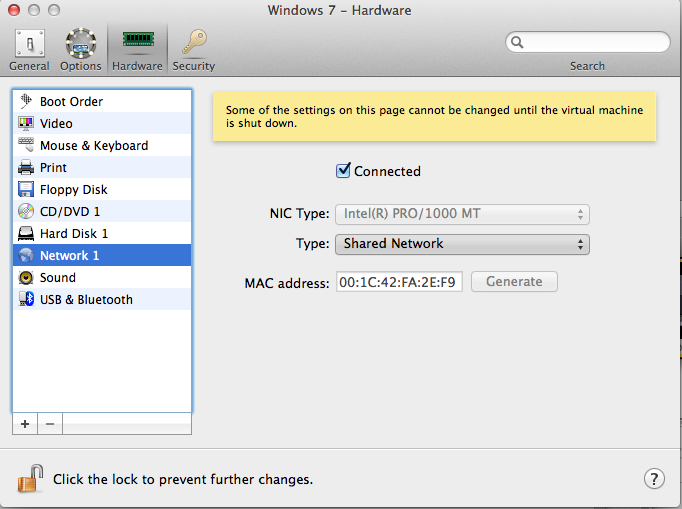
If you have your Parallels Virtual Machine configured in the default manner, the network connection type will be Shared Network, as seen here:

Screen Shot 2014-07-23 at 3.20.51 PM

The problem is that it will renew the DHCP Lease every 30 minutes with this setup. This shouldn’t be an issue, but the V4 client of MTGO is touchy about the connection, and will boot you every time it resets.

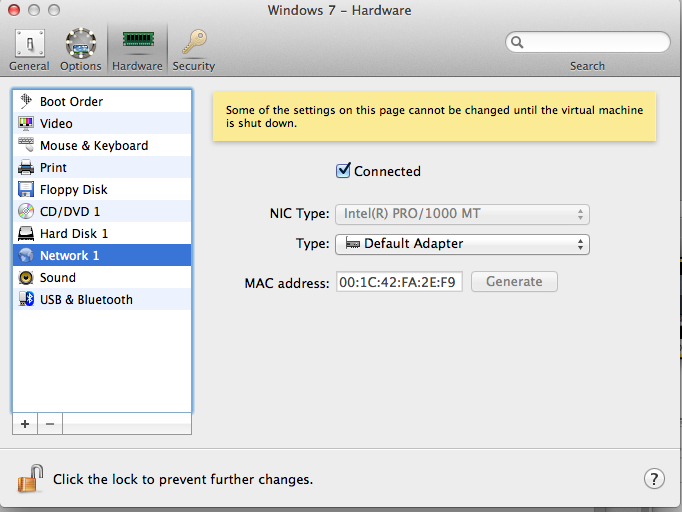
If you change your “Type” to Default Adapter like this:

Screen Shot 2014-07-23 at 3.20.42 PM

The program will renew the lease every 24 hours, eliminating the problem.

If you find yourself with constant disconnect issues, this should fix it (it did for me).

Good luck!

-Marshall

When to Move From Swiss to 8-4 on MTGO

“Hello Jon and Marshall. Love you show and certainly i am getter a little better thanks to you guys. I have a very simple question and maybe one that you guys have already addressed before (though i could not find it anywhere): when should i move up from swiss queues to 8-4’s? Ive been grinding swiss for little while now, to the point where I go into the draft expecting to 3 0. Since 4322’s have worse EV, I’ve tried to 8-4 twice and got crushed. Should I insist on 8-4? Should I try 4322’s? Does the rating matter at all while deciding this kind of things?”
Good question! One that we get fairly often, actually.

I’d recommend checking out this show #146. (Man, that episode feels like it was just yesterday!)

Also, the links in those show notes are very good. Especially check out Steven Stadnicki’s article. Also, this link will show you that below a 50% win percentage 4322 is better, above 50% 8-4s are better, and that 4322 is never the most efficient option.

You also have to take into account what’s valuable to you. If you’re looking to maximize most Magic played relative to money spent, Swiss is by far your best bet.

Your win percentage is going to change from Swiss to 84, though to what degree I can’t say. It might feel like your win percentage is lower when you draft 84s because you play less rounds per draft, so it’s hard to get a good feel for it with a few number of drafts.

There’s really no key moment that defines “now it’s time to draft 84s”. I wish there was a rule like “after you go 9-0 in Swiss it’s time to move on,” but there’s not. You just kind of go by feel, since most of us don’t have enough data to make a purely mathematical choice.

Overall, make sure you’re not lying to yourself. If number of rounds played is important to you, don’t make yourself play 84s over swiss if it will make you less happy in the long run. Just don’t fall into the inefficient 4322 trap.

-Jon Loucks

How We Record The Show

We get asked a lot about the equipment and software used to produce Limited Resources. When we started the show, I wanted the most straight-forward setup that yielded the highest sound quality. Here is what I settled on

1. Microphone

I looked around a bit online and found that many podcasters were really pleased with their (Blue Snowball USB microphone)[http://www.amazon.com/Blue-Microphones-Snowball-Microphone-Textured/dp/B000EOPQ7E/ref=sr_1_1?ie=UTF8&qid=1362514708&sr=8-1&keywords=blue+snowball].

It looks kind of weird, but it works very well. It has 3 settings as well which change where the microphone “points”. Basically, you can make it so it only collects sound from directly in front of the mic (I use this setting for recording LR and videos), or you can make it gather sound from all around itself. I use this for when I am on the road interviewing guests as we can just sit in a room and use one mic.

I will say, that any USB headset will do just fine. Ryan used a reasonable quality USB headset for his entire run of LR, and he sounded great. (I noticed that you didn’t compliment MY audio, Marshall. For what it’s worth, I use (this USB headset)[http://www.amazon.com/gp/product/B001SEQN3K]. It’s ok.)

I also use a basic pop filter, though this is optional. I just bought (this cheap one from Amazon)[http://www.amazon.com/Nady-MPF-6-6-Inch-Microphone-Filter/dp/B0002CZW0Y/ref=sr_1_1?s=musical-instruments&ie=UTF8&qid=1362514945&sr=1-1&keywords=pop+filter], and it works fine.

2. Computer

You can use a Mac or a Windows machine, it doesn’t need to be particularly powerful, though it is nice to have. I did about a year’s worth of LR on a Macbook Pro, then switched to my current setup which is a 27” iMac (2.93GHz i7, 16GB RAM). For recording and editing the podcast, either option is fine.

3. Software

Since I use a Mac to produce the show, I’ll tell you about the Mac software I use. There are Windows equivalents available for all of these, but I am not familiar with them enough to recommend anything.

The first step is to record the actual audio. We use Skype to record the show, and I recommend it. It’s free, and the sound quality is amazing. Just make sure you aren’t using your internet for much else besides talking on Skype when you are recording.

To take the audio from Skype, I use Audio Hijack Pro. It’s a sweet app that lets you “hijack” audio from any source on your computer. This produces a high-quality audio file that is edited and processed.

To edit the show and process the file, I use Garageband. It comes for free on Macs, and is a powerful and relatively easy to use tool for the kind of editing needed on a podcast.

After exporting the show in its final form, I use Dropbox to send the file off.

That’s it! You really don’t need much to start your own podcast. The thing I really love is that after you get set up, you can stop worrying about technical stuff and just focus on the most important thing: The content.

-Marshall

Fix My Game


This is a long email, but it brings me to an important point. Probably the most important point this blog will make for players looking to improve their game. I’m including the entire email because I feel like it’s important to setting up the lesson.

Listener writes,

I have only started to listen to your podcast since Gatecrash came out. I actually heard about it from the daily mtg podcast and thought I would check it out. I have been playing for just over a year now and I absolutely love draft and limited. I also like trying to get better at this stuff, which is where you guys come in.

You just reminded me thanks those guys over at the dailymtgpodcast! You’re not the first write-in who’s found us through them.

I have been debating madcap skills with my “magic” friends. I have been on the side that it is very risky since the prerelease, when getting 2 for 1ed lost me a couple of games. However, drafting at my local store on Thursday a terrible thing happened to me….

It was a pod of 6, the first time I have drafted at a small table in gatecrash. I knew 2 of the other guys and their styles VERY WELL, having played team sealed with them at GP London. I drafted what I considered to be a fairly strong Gruul deck. It didn’t have enough quality 2 drops, but it was pretty sweet. I had gone 2 and 0 and was playing on “the top table.” As we rare draft at the end we were playing for either a breeding pool or an Aurelia. The guy I was up against had been the only boros drafter at the table…. I had taken a few quality combat tricks as I had been sitting to his right, but I knew his deck was going to be very fast. Game 1 was very close. He flew over the top with 2 skyknights to win, with him on 3 life.

Game 2 on the other hand, was a different story. I started my turn 3 with a Greenside watcher on the field, my opponent having played a Wojek Haberdiers in his 2nd turn. I had a pit fight, a Zhuur-Taa Swine and a Disciple of the Old Ways as well as a couple of land in hand. I swung with the watcher, he didn’t block. So I played my Disciple and a land and passed the turn. So I had a potential first striker for him to swing into. He then untapped and played madcap skills onto his creature. He swings for 6. I am like “ok, this is fine I can take 6 now and kill it next turn with my pit fight. I untap and swing with both my 2 drops, he takes 4. He has 1 white mana open. I think, there is only 1 card in the whole of this set that can save him from a 2 for 1. I pit fight my greenside watcher with his halberdiers. He taps his 1 white mana and plays Shielded Passage. I think “oh crap.” I lose my watcher and my pit fight and he untaps. He then lays another planes and then a Holy Mantle on his Wojek. He swings for 8. I am on 6. I don’t draw either of my homing lightnings and he wins the next turn with 1 creature with 2 creature auras on it. He is OVER THE MOON. His friends are around him telling him how clever he was to have drafted those cards and have kept that hand even though that was his only creature.

I am not going to lie, this whole thing made me feel pretty bad. I felt like he had won with no idea of what he was doing or the risks he was taking, I don’t think I had made a play error and I don’t think I can make myself wish I had drafted those madcap skills.

Have you got any advice for someone like me? I am at uni at the moment so I can only really afford to draft once a week right now. I am trying to read as much as I can in order to improve, but things like this are a pretty big kick in the teeth when I did everything as right as I could….

Thank you for your podcasts. I wind up refreshing the podcast page every few hours towards the end of the week waiting for the latest installment. I find them really interesting and I think they are teaching me how this game works.

I see a few things going on here, so I’ll take them piece by piece.

Did you make a mistake?

It’s always hard to tell in emails if somebody screwed up, because there’s so much going on and it’s all impossible to cover in an email. But, from what I can tell, I see a few other plays you could have made.

First, it sounds like you main phased your Pit Fight. And you did it playing right into a trick that you even thought about. Granted, you probably main phased it so that his only option was that one card, not a slew of others once he has mana open. I can’t tell you exactly if that was a mistake or not, again there are a lot of factors, but waiting to play you removal spells is often better. Waiting and letting him untap may be an even safer play, since he might tap out on turn four. Even if he doesn’t have the trick, waiting can net you a larger advantage if he tries to play a second Madcap Skills. Heck, he even had the Holy Mantle! How sweet would it have been if he tried to cast that on turn four and you blew him out with a Pit Fight in response? Or, maybe it’s worth leaving your two creatures back to double-block his guy with Madcap Skills. When he casts Shielded Passage (which he’s likely to do) then you get him with Pit Fight.

It’s very possible that the correct play was to Pit Fight on your turn. But I’m hardly willing to write it off as “you did everything as right as you could.”

What to do when you lose.

Here is a common email that we get, with a few of the common endings”

“Hi, I love the show! Here’s a lengthy recount of the draft I did last night. I didn’t win…” *”…but I I should have.” *”…but I deserved to.” *”…and I don’t know why.” *”…because I got unlucky.” *”…because my opponent got really lucky.” *”…because I built my deck wrong.” **”…and here’s my entire deck/sealed pool. Tell me where I went wrong.”

Usually, though, I don’t feel like the listener entirely knows what they want. I can tell that they lost, that they’re frustrated by their loss, and that they don’t entirely know how to react. It’s no surprise that they turn to us, their go-to source on Limited, for answers, even though they don’t really know the question.

There’s a lot of philosophies out there, but here’s my most recent one:

It doesn’t matter why you lost. Not exactly why you lost, at least. When you lose, you shouldn’t invest your energy in drilling down to that one mistake that caused you to lose. I feel like listeners want me to look deep into their game and find that one missing cog; replace the cog, and the win-machine starts turning again. But that’s not how it works. The strength of you Magic game, and whether you win or lose, is a massively complicated system, some of which is out of your control.

Getting better isn’t about “correcting” your losses. It’s aboutconstantly examining, exploring, and adjusting your game. Whether you win or lose a game shouldn’t matter – everything should inform your Magic game. Let me say that again:

Don’t try to improve at Magic by only looking at your losses.

What we try to do on our show is give listeners the tools and lenses to examine the various pieces of their game. Sometimes we focus on a single piece, (like #157’s mulligan talk)[http://www.mtgcast.com/mtgcast-podcast-shows/active-podcast-shows/limited-resources/limited-resources-157-mulligan-strategy-discussion]. (On New Years we each looked inward)[http://www.mtgcast.com/mtgcast-podcast-shows/active-podcast-shows/limited-resources/limited-resources-163-new-year-story-time] and identified where our own games need the most work. While it’s good to focus from time to time, you can never write off any part of your game as “perfected”.

So what do YOU do, listener who wrote in?

It sucks to lose to somebody that seems worse than you. You’ve spent time and energy learning and utilizing that creature enchantments are inherently risky. Then you lost to somebody that hasn’t. It sucks and it’s frustrating, but it’s not really relevant to improving. Letting your guard down or discounting games against perceived “lesser” opponents wont help you. I’ve lost my fair share of games where I underestimated my opponent – you just can’t do it.

To be honest, Marshall and I are probably a little too harsh on creature enchantments. There’s a time and a place for them – especially one as efficient and powerful as Madcap Skills. We tend to be so harsh on them because a lot of our listeners inherently think these cards are good. We knowingly over correct a little, hopefully improving their game in the long run.

You’re in a very common situation. I hear from listeners all the time who only get to draft once a week (or less). They want to improve, are frustrating with losing, and try as much as they can to get better at Magic in the downtime between drafts. Unfortunately, the BEST way to get better at drafting is to actually draft. I feel for you guys, but I don’t know what to say. Reading and listening to strategy helps, but it has diminishing returns when you’re putting the lessons into action so infrequently.

Honestly, I don’t know what to tell you other than “draft more.” Otherwise, you’re doing what you can, but it can only get you so far.

On a personal note

I’m not playing Magic as much as I once did. I spend more time writing and talking and thinking about Magic these days than I play. (You’re welcome.) I play enough to keep my skills up (or else my writing and talking will suffer) but I’m not actively looking to improve. I’ve had to settle with where I’m at right now, because I’m not investing enough energy to improve.

It’s frustrating sometimes. I used to walk into PTQs expecting a Top 8. I could feel the fire burning and I loved that feeling deep in my chest when I felt powerful and my opponent was scared of it. (I get this stare when I’ve got my opponent in a corner and I’m closing in on the jugular.) Now, I walk in just as scared as the rest of them – or at least the ones that know enough to be scared.

Getting better takes time and energy. Treading water, not so much. I’m in a holding pattern for now, but I hold on to the idea that one day I’ll throw some wood in the fire again.

So there you go. Hopefully something in there helped 🙂

-Jon Loucks

How I got Into Game Design

Whenever I see an email with a question that I’m sure I’ve answered before, that’s a good time for a blog post. For example…

I am a big fan of the show and would credit it as one of the primary reasons I have gotten heavily interested in MtG again since quitting around 2001. I was wondering if there was a way I could correspond with Mr. Loucks regarding game design in general and careers in game design. I am currently a general surgeon in northern Michigan, however I have already decided to leave this career when my contract has expired and have been growing more increasingly interested in games and game design as a field as it has always been a great passion of mine. I would appreciate any opportunity to ask a few questions and get an idea of what actually working in the field is like, as I have minimal experience. Sorry to clutter the pocdast’s email with this but I wasn’t sure how to go about it otherwise.

So I dredged up my response to the last email I wrote on this topic, and edited it for the blog. It was emails like this that made me think “why am I sending this to just one person?” and led to the creation of this blog.

My Story

Game design is a weird field. Actually, I find all of games to be kinda weird. It’s an oddly small industry, in that a lot of people know each other, and people tend to get passed between companies without really leaving the machine. I thought it was just the small startups I started working at, but Microsoft and Amazon have been the same way, largely. It seems like every time we hire somebody (design, art, dev) they’ve worked with multiple people at the company, each at different companies. That might also just be the Seattle area, what with Microsoft, Wizards of the Coast, Popcap, etc. My point is that connections seem important. So how do you get in the door to begin with? I’ll tell you my story, because that’s all I know. It seems like everybody gets in their own way, and my story is the one I know, so here you are.

Magic was my “in”, in multiple ways. It gave me something relevant to the game industry that I could talk about and put on my resume. (I still spend a lot of resume real estate on MTG to this day.) Along with that came the actualknowledge it gave me – I started to understand games better. The tournament playing, deckbuilding, writing – that all gave me certain lens from which I could look at games. It gave me language I could use. Similarly, I read a lot of articles early in my MTG career – most importantly including Mark Rosewater’s column on dailymtg.com. I was rich with MTG knowledge.

Important Note: You should be reading Rosewater’s monday column on dailymtg.com if you want to do game design. It’s pretty insane. And probably listen to his podcast. I haven’t been keeping up with his material over the last year or so, but it was instrumental in giving me a base. I would not be where I am now if it wasn’t for Rosewater’s content.

So that’s where I was when I went to college – a magic playing building reading fiend. I started writing shortly after. (You should have seen how giddy I was when tcgplayer wanted me to write for them. It was super giddy.) Before school even started, during my orientation (for University of Washington), I was thinking of joining the honors program, so I went to a talk about it. (Lol honors program, I wasn’t even close, but at least I was interested.) It was a small talk in a classroom, more of an FAQ, and the guy mentioned “Richard Garfield, the creator of Magic: the Gathering, is even teaching a class” as a cool example of the types of honors courses that existed at UW. SPIT-TAKE! I had no idea. It was hard to hid my erection in the crowded classroom as I asked for more information.

I immediately tracked down how to get into the class, and took it as soon as I could despite not being in the actual honors program. It was a small fun class. I’m sure I was a huge nerd fanboy the entire class. Noah Weil even showed up for a few lectures, for funzies. I got him to sign my Fireball! Anyway, Skaff Elias (Richard’s co-teacher and Magic co-founder, the creator of Organized Play, among other things) took a liking to me for whatever reason. (I thank god every day that I’m so damn cute.) When the class was over, I asked Skaff if there were any internships he knew about, because I’d love to start working on game design. He said he knew just the thing.

Skaff sent me over to his friend Tyler Bielman, who was working at a small startup creating a TCG about endangered animals. (Xeko – a beautifully designed game that taught me the importance of designing for an audience. It’s long gone, though there is rumor of a kickstarter.) I interviewed with Tyler, and I managed to get by almost exclusively on my Magic knowledge. (And the good looks.) He asked me some rules questions (more like “how should our game handle simultaneous triggers” type questions) and we played the game together at Starbucks. I got the job!

From there, it seems I was in. I worked under Tyler for a year until Xeko went under. Then I followed Tyler to Arcane Legions to work for Jordan Weisman (Mech Warrior, Shadowrun, etc, gaining a new and very valuable contact). Then when that game went under, I followed Tyler to Microsoft in Canada. (That was a harder job to get, both because of Microsoft and because of Canada, but I managed to make it.) Just as my contract at MSoft was coming up and I was missing Seattle, Skaff hooked me up with a friend of his at Amazon, and here I am. Somehow. Amazon has gained me another slew of awesome contacts. It took me about 3 or 4 years to go from intern to full-time non-contract game designer, though for part of that I was trudging through college.

These three people were invaluable in getting me to where I am now: Mark Rosewater. Tyler Bielman. Skaff Elias. I have yet to properly repay any of them.

Along the way there were failed job interviews and false starts, but somehow I managed to stay in the industry. I feel very comfortable now having worked at Microsoft and Amazon, gaining some great contacts along the way. I now feel confidant in my abilities.

So what can you take from my story? Opportunities come in strange places. For me, it was Magic + UW class + Fortuitous internship. Tyler got in through WOTC on a marketing contract, then went on to create the color pie or something. I worked with a girl Jessica that got into Jordan Weisman’s company by being a big player in I Love Bees, the big Halo ARG. (I hope I’m remembering that story correctly.) My boss at Amazon, Jonathan Tweet, was a big player in DnD and is now working on Social Games. It’s all very weird.

Playing games and playing them well might be your in. Lots of people say “do the job you want before you have it”, and that’s especially true of game design. Just start making games. (This is something I wish I did more – I spent all my time playing Magic. I need to work on my actual game-building craft.) Become active in a game community. (Gavin Verhey, Tom Lapelle – these guys did a good job of becoming active in MTG, then landed a job.)

One last thing: I’m amazed at how much mileage I’ve gotten out of the Great Designer Search 2. I’ve gotten a lot of contacts for jobs that start with “we saw your work in the GDS2 and…” Non-WOTC people really look at that – it’s weird. Not that I got those jobs, but there you go. I think “game design” is such a weird nebulous job that ANYTHING you can point to as evidence of your skill is valuable. For most people this is pointing to an actual game you designed.

There you go, my story and some advice. I’m happy to answer further questions on the topic. Otherwise, good luck!

-Jon Loucks

Which Draft Queue?

Listener writes,

Hello Jon and Marshall. Love you show and certainly i am getter a little better thanks to you guys. I have a very simple question and maybe one that you guys have already addressed before (though i could not find it anywhere):when should i move up from swiss queues to 8-4’s? Ive been grinding swiss for little while now, to the point where I go into the draft expecting to 3 0. Since 4322’s have worse EV, I’ve tried to 8-4 twice and got crushed. Should I insist on 8-4? Should I try 4322’s? Does the rating matter at all while deciding this kind of things?

Good question! One that we get fairly often, actually.

I’d recommend checking out this show #146. (Man, that episode feels like it was just yesterday!)

Also, the links in those show notes are very good. Especially check out Steven Stadnicki’s article. Also, this link will show you that below a 50% win percentage 4322 is better, above 50% 8-4s are better, and that 4322 is never the most efficient option.

You also have to take into account what’s valuable to you. If you’re looking to maximize most Magic played relative to money spent, Swiss is by far your best bet.

Your win percentage is going to change from Swiss to 84, though to what degree I can’t say. It might feel like your win percentage is lower when you draft 84s because you play less rounds per draft, so it’s hard to get a good feel for it with a few number of drafts.

There’s really no key moment that defines “now it’s time to draft 84s”. I wish there was a rule like “after you go 9-0 in Swiss it’s time to move on,” but there’s not. You just kind of go by feel, since most of us don’t have enough data to make a purely mathematical choice.

Overall, make sure you’re not lying to yourself. If number of rounds played is important to you, don’t make yourself play 84s over swiss if it will make you less happy in the long run. Just don’t fall into the inefficient 4322 trap.

-Jon Loucks